This article delves into the intriguing history and undeniable charm of Marlborough, Massachusetts. Defined by its rich historical narrative and dramatic transformation from a prosperous industrial town to a modern-day high-tech hub, Marlborough exemplifies the resilience and adaptability of American cities.
This exploration provides insight into the city's geographical setting, major historical milestones, industrialization journey, demographic shifts, and current socio-economic landscape.
It further highlights the city's unique blend of history, commerce, and natural beauty, underscored by its diverse workforce and multiple business establishments.
The intent is to provide an innovative perspective on how cities like Marlborough have been shaped by historical events, demographic changes, and modern developments, providing valuable lessons for other cities navigating similar trajectories.
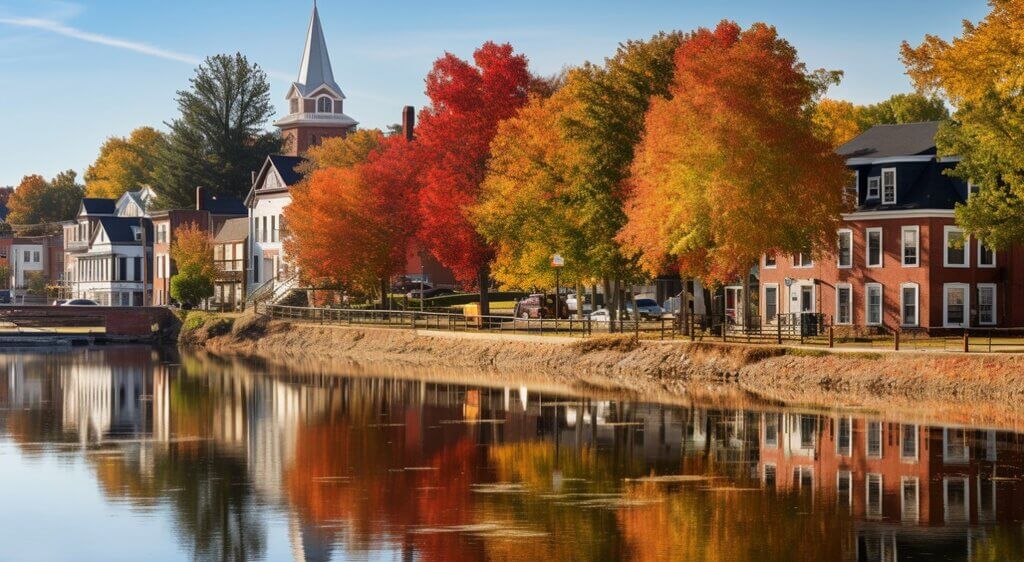
This in-depth analysis of Marlborough's past and present, framed through an academic lens, seeks to offer a comprehensive view of this remarkable city's evolution.
Marlborough, Massachusetts, situated at coordinates 42°20′45″N 71°33′10″W, encompasses an area of 22.10 square miles (57.24 km²) and is bordered by several towns including Berlin, Hudson, Sudbury, Framingham, Southborough, and Northborough.
Elevated 450 feet above sea level, the city's geography is marked by a blend of urban development and natural beauty. The Assabet River graces the northwest corner, creating a picturesque landscape.
Three large lakes, namely Lake Williams, Millham Reservoir, and Fort Meadow Reservoir, dot the city, adding to its charm. The Fort Meadow Reservoir extends into Hudson, indicating the shared natural resources among neighboring towns.
The city's strategic location and diverse geographical features form the foundation for its rich and dynamic history.
Historical developments in this city, established in 1657 by 14 men led by Edmund Rice, John Ruddock, and John Howe, highlight a journey from an early settlement named after a market town in Wiltshire, England, to a prosperous industrial hub in the 19th century, and finally to a high technology industry center in the late 20th century.
Marlborough's transformation was aided by significant infrastructure developments, such as the construction of the Massachusetts Turnpike.
Initial prosperity stemmed from the shoe manufacturing industry, with the city becoming a major production center by 1890.
Read more: Ghiloni Nature Trail: Exploring The Beauty And Wildlife Of The State Forest near Marlborough
The late 20th century saw a shift towards high technology and specialized electronics, spurred on by the creation of Interstates 495 and 290.
Today, Marlborough stands as a testament to adaptive economic strategies, reflecting innovation and growth.
The journey towards industrialization in this city began in earnest in 1836, when Samuel Boyd and his brother Joseph established the first shoe manufacturing business, marking the start of a booming industry that would define the town's economic landscape for over a century.
Marlborough swiftly emerged as a major shoe manufacturing center, supplying boots for Union soldiers and civilian footwear. The city's official seal, featuring a factory, a shoe box, and a pair of boots, is a proud testament to this industrial heritage.
Notable shoe brands such as Frye and Rockport had their roots in this city. This transition from a small settlement to an industrial powerhouse signifies Marlborough's innovative spirit and commitment to economic growth, setting a precedent for future industries.
Diverse demographic shifts have been observed in this city over the years, with a significant wave of immigrants, primarily from Quebec, Ireland, Italy, and Greece, who were drawn to the flourishing shoe manufacturing industry.
These skilled craftsmen brought with them a wealth of experience and expertise, significantly contributing to the industrial growth of Marlborough. Consequently, the city became known as a manufacturing hub, characterized by a diverse workforce that enhanced its socio-economic fabric.
As per the 2020 census, Marlborough had a population of 41,793, a steady increase from the previous years, showcasing its attractive growth.
The composition of the population is predominantly White, complemented by notable African American and Asian populations, and a 6.06% representation of Hispanic or Latino individuals.
Current economic growth and development patterns reveal a city that is home to numerous businesses, stores, and restaurants. Companies with significant presence in Marlborough include TJX, Raytheon, Hewlett-Packard, AMD, and Boston Scientific.
The Marlborough Regional Chamber of Commerce advocates for over 650 businesses, reflecting the city's vibrant economic landscape.
Proximity to major routes—495, 290, 20, and the Massachusetts Turnpike—enhances Marlborough's appeal as a business hub.
More information about Marlborough MA
Connectivity is further bolstered by the MetroWest Regional Transit Authority (MWRTA), linking Marlborough with neighboring towns and cities.
Private taxi/limousine services, including Marlborough City Taxi and American Way, offer additional transit options.
This blend of thriving businesses, strategic location, and effective transportation network underpins Marlborough's modern charm.